Explode 2: Get Exposed
- 4.6
- Rating
- 50.00K
- Installs
- Free
- Price

 Analysis by App-foxy
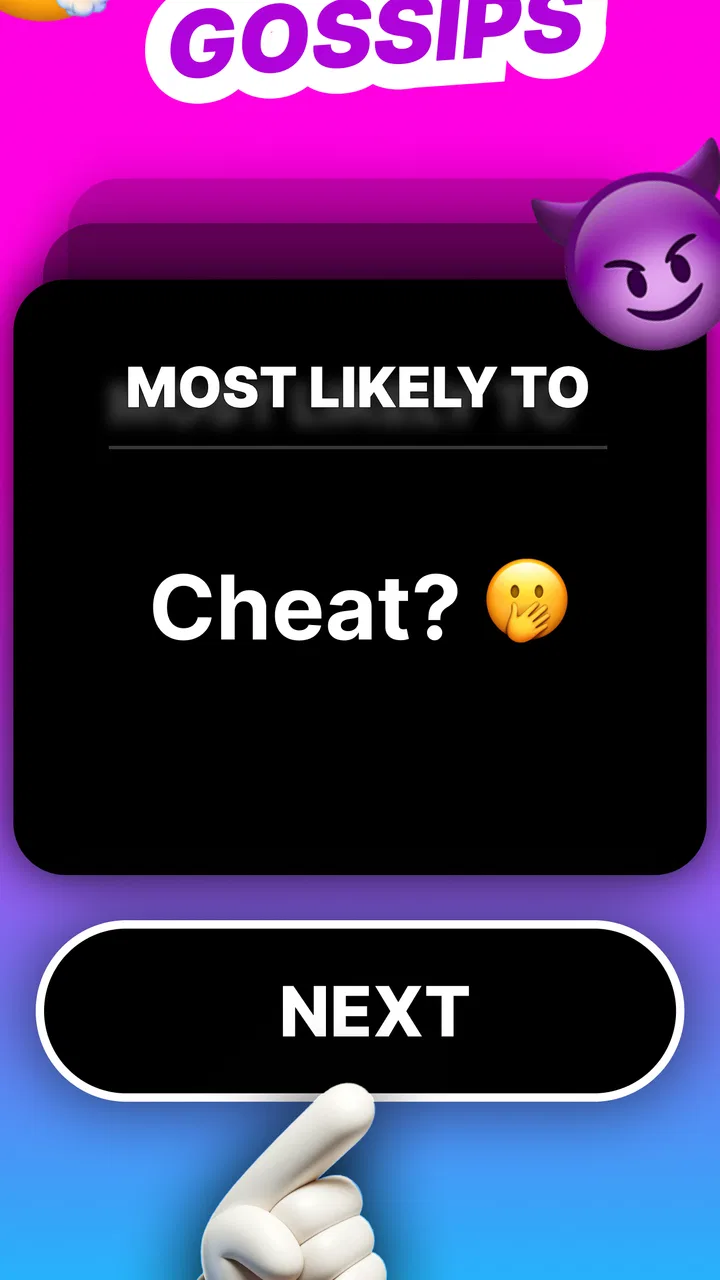
I spent time with Explode 2: Get Exposed, a free trivia game built around gossip, classic “exposed” moments, and quick reactions. Its idea is easy to understand: open the game, face a prompt, and decide how much you really know about the people, stories, or familiar topics being presented. That simplicity makes it approachable, but it also means your enjoyment depends heavily on whether this particular style of trivia matches your mood.
My first impression was that this is best treated as a casual conversation starter rather than a deep quiz platform. I can imagine opening it while waiting for a friend, passing a phone around during a relaxed evening, or using a few rounds to break the silence when nobody wants to commit to a longer game. The developer is Sebastien Menozzi, and the game sits firmly in the trivia category, with a Teen content rating that fits its gossip-focused tone.
How I settled into the everyday play loop
The most comfortable way to use it is to keep the first session short. I would start a round without trying to memorize every answer, pay attention to the kind of questions that appear, and then decide whether the subject matter keeps me interested. That sounds obvious, but it matters here: the appeal is not simply “answer questions.” It is the feeling of recognizing a reference, making a quick guess, and seeing whether your instinct was better than your memory.
You May Also Like

 AccuWeather: Weather Radar
AccuWeather Review: A Quick, Clear Forecast for Everyday Decisions
For everyday plans, the best forecast is the one you can understand quickly. AccuWeather makes rain timing, radar, and local conditions easy to act on, with a few trade-offs.

 Hill Climb Racing
Why Hill Climb Racing Still Turns Crashes Into One More Run
A tiny car, a bumpy hill and one more upgrade: Hill Climb Racing keeps resurfacing because its simple chaos makes every near-miss feel personal.

 AliExpress - Shopping App
AliExpress Makes Global Shopping Feel Personal, but Shoppers Bear the Risk
AliExpress turns a global marketplace into a pocket-sized discovery engine. Its reach is useful, its shopping loop compelling, and its trade-offs easy to miss.

 Lords Mobile: Kingdom Wars
Lords Mobile Is a Kingdom-Building Routine, Not a Quick Match
A case-by-case verdict on the building, battles, device demands, and social commitments that make Lords Mobile rewarding for some players and exhausting for others.

 PDF Scanner app - TapScanner
TapScanner Makes Paperwork Easier to Capture, Check, and Share
TapScanner makes scanning with a phone feel less like a rescue operation and more like a dependable step in getting work done. Its capture tools are useful, though not flawless.

 Block Blast!
 Shows How Much a Puzzle Game Can Leave Out
A quiet grid game shows why puzzle players increasingly value instant clarity, repeatable skill and low-pressure play—and where the genre still needs to catch up.
More From Our News Desk
View All News


For a solo player, the basic workflow is straightforward. I open the game, play a few prompts, and stop when the questions begin to feel repetitive or when I want a different kind of challenge. It works particularly well in small gaps during the day because it does not demand the commitment of a long campaign. I would not install it expecting a large role-playing structure, a detailed progression system, or a traditional board-game simulation. Its strength is the compact trivia encounter.
In a group, I found the best approach was to read the prompt aloud before anyone answers. That turns a private guessing exercise into a small debate. One person may remember a detail, another may recognize the name, and a third may confidently choose the wrong answer for a surprisingly entertaining reason. The game is more enjoyable when players explain their guesses instead of silently tapping through them.
A realistic use case is a casual evening where everyone is already looking at their phones. Rather than asking people to install a complicated multiplayer title or learn a set of rules, one person can use the game as a source of quick questions. The important habit is to keep the pace moving. If the group spends too long arguing over every answer, the lightweight design loses some of its charm.
The store summary describes gossip and classic exposed games, while the short description uses the phrase “Explode 2.” I read that as a signal that the game is aiming for energetic, reveal-oriented trivia rather than quiet academic testing. That distinction helped me set the right expectations. If you enjoy pop-culture discussion, surprising revelations, and questions that invite a reaction, the concept is easier to appreciate than if you are searching for geography drills or a formal general-knowledge course.
What I would check before settling in
Before making it part of my regular rotation, I would look at the game’s current version and device compatibility. It is listed as version 1.0.32 and requires Android 8.0 or newer. That is useful for anyone using an older phone or tablet: the game may be a good fit only if the device meets that baseline. I would also make sure the operating system is updated enough for the installation to behave normally, especially on a device that has been sitting unused for a while.
I would also pay attention to the age guidance. The Teen rating is not a minor detail for families sharing a tablet or letting younger players browse installed games. Gossip-centered trivia can involve themes or references that are more suitable for teenagers than children. I would personally preview the style before handing the device to a younger family member, rather than assuming that a colorful trivia format is automatically child-friendly.
The game is free to download, which makes trying it low-risk, but it includes in-app purchases ranging from $9.99 to $49.99 per item. That is the point where I would slow down and decide how I want to use it. A free entry point is convenient, yet any purchase should be considered separately from the basic test of whether the questions are enjoyable. I would avoid tapping through payment screens casually, particularly when passing the phone around in a group.
One practical habit is to establish a no-purchase rule before a shared session. If several people are taking turns, nobody has to wonder whether a button leads to another question, a continuation, or a paid item. This is not about assuming the game is difficult to control; it is simply a sensible way to keep a casual activity from becoming an accidental spending decision.
I would also check the sound and notification behavior on my device before playing in public. Trivia is often used in places where a sudden sound is awkward, such as a waiting room or a quiet break area. If I want to use it in those situations, I would lower the volume first and keep the session discreet. That small preparation makes the game more flexible without pretending it offers a special productivity mode or a hidden silent setting.
Habits that make short sessions feel faster
Experienced use is less about discovering secret controls and more about building a repeatable rhythm. I found it useful to answer promptly, accept that some questions will be guesses, and avoid turning every uncertain prompt into a research project. If I stop to search for background information after each question, I am no longer playing a quick trivia game; I am creating a separate fact-checking activity.
My preferred pattern is three stages. First, I answer from memory. Second, I notice why I chose that answer: recognition, elimination, or a complete guess. Third, I decide whether the result is interesting enough to discuss. This gives each prompt a little more value than a simple right-or-wrong tap, and it works especially well when playing with friends who enjoy explaining their reasoning.
For solo play, I would keep a mental distinction between knowledge and familiarity. Gossip questions can reward remembering a name or headline without proving that the player understands the wider subject. That is not a flaw by itself, but it changes how I interpret a good score. I would treat success as evidence that I recognize the game’s subject matter, not as a complete measure of general knowledge.
Another useful pattern is to play when the group’s energy is already high. The reveal-oriented concept benefits from reactions, teasing, and quick opinions. If everyone is tired or wants a serious challenge, the same prompts may feel shallow. Timing has a bigger effect here than it would in a quiet crossword or a structured quiz app.
I would also rotate who controls the phone. When one person handles every question, the others can become passive spectators. Passing the device after a small batch keeps attention more evenly distributed and makes the game feel like a shared activity rather than one person demonstrating their memory. This is a simple group habit, but it is one of the most effective ways to get more from the format.
Compared with a conventional trivia app focused on broad facts, this game feels more social and more dependent on shared cultural awareness. A traditional quiz is usually the better choice when I want geography, science, history, or a clearly defined learning goal. Explode 2 is the better choice when I want a lighter subject, faster exchanges, and questions that can lead to conversation even when nobody knows the answer immediately.
Where the format reaches its limits
The same focus that gives the game its identity can also narrow its audience. Players who dislike celebrity gossip, exposed-story themes, or questions based on cultural familiarity may lose interest quickly. I would skip it if my main goal were studying for an exam, improving a language, or building a systematic knowledge base. Those tasks need explanations, organized subjects, and dependable learning feedback rather than quick reveals.
I also would not choose it as the only game for a long gathering. The compact format is useful in bursts, but a full evening may require variety. After several rounds, I would switch to a board game, a more traditional quiz, or an activity where players create their own questions. That is not a criticism of the core idea; it is a reminder that a focused trivia game does not have to serve every social situation.
The purchase range is another consideration for value-conscious players. Since the game is free to start, I can test the basic experience before spending anything. However, someone looking for a completely purchase-free app should approach carefully and decide in advance not to buy optional items. The presence of higher-priced individual purchases makes it especially important to treat the free download and the full potential cost as two different questions.
There is also a difference between a good score and a satisfying session. A player may answer many prompts correctly but still feel that the content is repetitive or too dependent on recognition. Another player may miss several answers but enjoy the discussion around them. I would judge the game by whether it creates the kind of interaction I want, not only by the number of correct responses.
People who need a game for children should be cautious because of the Teen rating. Parents may prefer a family trivia title with clearly educational categories and age-appropriate material. Likewise, anyone seeking competitive fairness should remember that cultural exposure varies widely. A player who follows gossip closely may have a built-in advantage over someone who prefers books, sports, technology, or science.
Who will get the most from it
The strongest audience is a teenager or adult who enjoys quick trivia, familiar names, and the social energy of revealing what others do or do not remember. It is also a reasonable choice for someone who wants a free game to test in short sessions without learning a complex ruleset. The current average rating is 4.5 from around 191 ratings, and the game has passed 10K installs, which suggests that it has found an audience without needing to be treated as a massive mainstream platform.
I would recommend it to a friend who often says, “I know this one,” during conversations about celebrities or classic exposed stories. I would not recommend it to a friend who wants detailed explanations after every answer, a large educational curriculum, or a deep competitive ladder. The distinction is important: this is a mood-based trivia pick, not a universal replacement for every quiz game.
The developer’s compact presentation works in its favor when I want something immediate. I can start without preparing a room, gathering equipment, or teaching complicated rules. At the same time, the game asks me to bring the social energy myself. It supplies the prompts, but the best moments come from the players’ reactions, arguments, and memories.
If I were introducing it to someone new, I would explain the format honestly: expect gossip-flavored trivia and classic exposed-style play, keep the first session short, and decide whether the subject matter feels entertaining rather than educational. I would mention the Teen rating and the optional purchase range before sharing the device. That gives the other person enough context to choose comfortably.
My most useful recommendation is to treat each session as a small event with a clear stopping point. A few rounds can be a good break, a warm-up before another game, or a way to fill an awkward pause. Trying to force it into a long, all-purpose entertainment system is where disappointment is most likely. The game is at its best when its narrow idea is exactly what the group wants.
My verdict after using it as a repeatable casual game
Explode 2: Get Exposed is worth trying if you want fast, gossip-centered trivia with a social edge. I like that the premise is immediately understandable and that it can fit naturally into short breaks or informal gatherings. The free download lowers the barrier to testing it, while the Teen rating and in-app purchase range are details I would keep in mind before sharing it with younger players or handing the phone to a group.
It is not the right choice for structured learning, serious general-knowledge practice, or players who need every question to come with a detailed explanation. A traditional trivia app will usually be more useful for those goals. A family-focused quiz may also be safer for mixed-age groups, while a board game may offer more variety for a full evening.
For me, the deciding factor is whether I want conversation or instruction. When I want a quick prompt that can make people laugh, argue, or compare memories, this game has a clear purpose. When I want to improve at a subject, track progress carefully, or play without a strong interest in gossip culture, I would choose something else.
That makes my final recommendation fairly specific: install it as a casual option, try a short session, and judge the tone rather than expecting a complete trivia library. If the exposed-story style matches your interests, the simple workflow becomes a strength. If it does not, no amount of faster tapping will solve the basic mismatch. Used in the right setting, though, it is an easy way to turn spare minutes into a lively round of questions.
FAQs for Explode 2: Get Exposed
01What is the main objective of Explode 2: Get Exposed?
Explode 2: Get Exposed is a fast-paced puzzle game that challenges players to strategically detonate bombs to clear levels. The main objective is to solve increasingly difficult puzzles using limited resources while maximizing your score. Each level introduces new obstacles and mechanics, keeping gameplay fresh and engaging.
02Is Explode 2: Get Exposed suitable for all age groups?
Explode 2: Get Exposed is designed for players aged 10 and up. While the game offers fun and challenging puzzles, it requires strategic thinking and problem-solving skills, making it suitable for older children and adults. The content is family-friendly, with no inappropriate themes or graphics.
03Does Explode 2: Get Exposed require an internet connection to play?
Explode 2: Get Exposed can be enjoyed both online and offline. While an internet connection enhances the experience by allowing leaderboard features and regular updates, players can still enjoy the core gameplay and progress through levels without needing to be connected to the internet.
04What are the in-app purchases available in Explode 2: Get Exposed?
Explode 2: Get Exposed offers optional in-app purchases that enhance the gaming experience. Players can buy power-ups, extra lives, and special bombs to help progress through tough levels. However, the game is designed to be fully playable without any purchases, ensuring a fair experience for all players.
05Are there any accessibility features in Explode 2: Get Exposed?
Yes, Explode 2: Get Exposed includes several accessibility options to enhance gameplay for all users. Features such as adjustable text size, colorblind-friendly modes, and customizable control schemes ensure that players with different needs can enjoy the game comfortably. Developers are committed to making the game as inclusive as possible.
Pros
- Engaging and fast-paced gameplay.
- Visually appealing graphics.
- Intuitive controls enhance play.
- Regular updates with new levels.
- Multiplayer mode for added fun.
Cons
- Frequent ads disrupt gameplay.
- Some levels feel repetitive.
- In-app purchases can be costly.
- Requires constant internet connection.
- Limited offline features.

Explode 2: Get Exposed
Gallery